Why You (Probably) Can't Sell Original Gouache Paintings
For gouache, the byproduct and the prints are often safer to buy than the original. It’s like defying the rule of nature. Original oil, acryclic, watercolor paintings gets sold all the time. Normally they’re the holy grail and the print is the alternatives. Not with gouache. It’s not a taste thing too, some people would love to hang up their lovely gouache painting or sell one to someone who values it. But you really should not. It’s because chemistry, let me explain why.
What even is gouache??
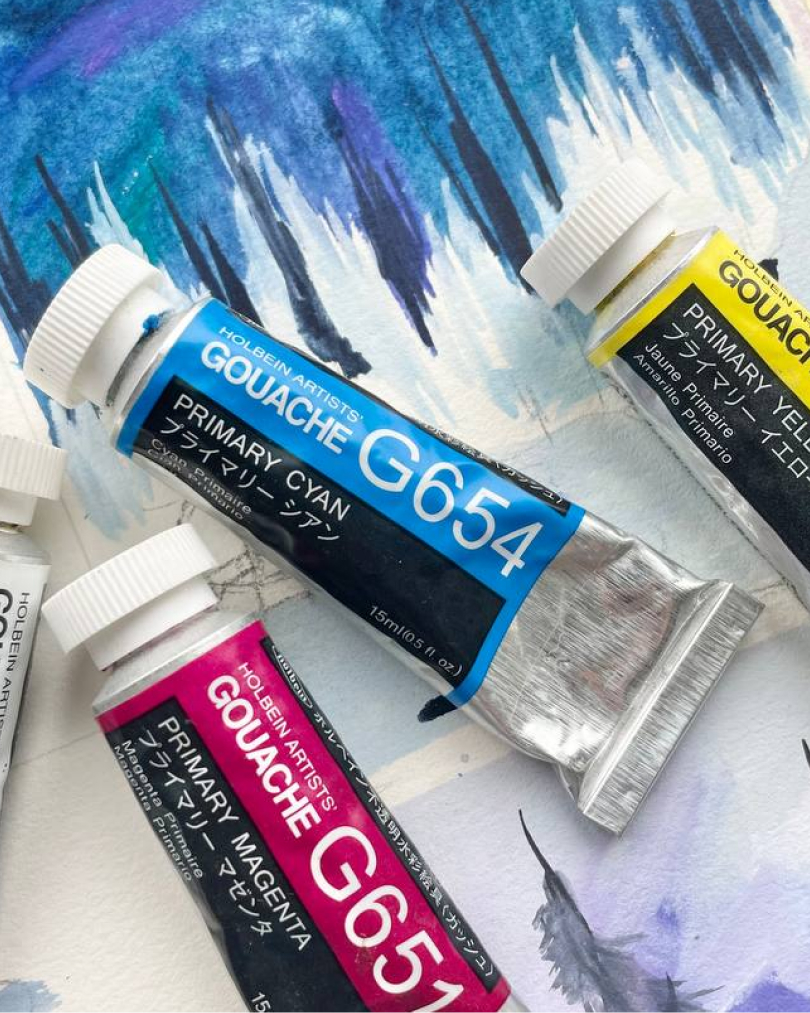 Gouache is like watercolor, but not transparent. I keep saying this over the years, gouache is like if watercolor and acrylic got married, and gouache is their love child. Same water-based deal, but way more pigment packed in, plus a chalky filler that gives it that flat, matte, no-shine finish. Watercolor wants to be see-through and glowy. Gouache wants full opacity and total control, you can paint light over dark, fix mistake, layer it like you're using acrylic.
Except, unlike acryclic, gouache never actually "locks in". Even when it's already bone dry, it's still water-soluble. Splash it, and it un-do itself. Keep this fact in your back pocket, it explains basically everything below.
Gouache is like watercolor, but not transparent. I keep saying this over the years, gouache is like if watercolor and acrylic got married, and gouache is their love child. Same water-based deal, but way more pigment packed in, plus a chalky filler that gives it that flat, matte, no-shine finish. Watercolor wants to be see-through and glowy. Gouache wants full opacity and total control, you can paint light over dark, fix mistake, layer it like you're using acrylic.
Except, unlike acryclic, gouache never actually "locks in". Even when it's already bone dry, it's still water-soluble. Splash it, and it un-do itself. Keep this fact in your back pocket, it explains basically everything below.
It was made to be digitized and reproduced, not framed
Did you know for the most 1900s commercial art, gouache was the main character that’s responsible for everything? Think book covers, ads, storyboard, even animation background. Some of the iconic Studio Ghibli’s backgrounds used “poster color” gouache. The whole point of those paintings was to get scanned or potographed. So basically, illustrators only need the piece to survive long enough to be photographed, because permanence was never really the assignment. That mentality shaped what kind of pigments got made and how artists related to the physical painting itself. Gouache was a tool, not the final product.
The material is kind of high-maintanance
- gouache never fully “sets”, it is forever reactiveable by water. So, humid room, spilled drink, bad shipping = smear city, even decades later.
- The colors will fade overtime. A peer-reviewed study in the journal Heritage tested actual gouache from Matisse’s Jazz portfolio using microfadeometry (real light-damage science). Of 39 colors, magenta, pink, and blue were the most fade-prone, and MoMA now rotates which Jazz prints get displayed based on that data. Illustrator James Gurney ran his own fade test on a modern gouache set and found reds and pinks, especially mixed with white, faded noticeably under light.
- you cant varnish it like normal. Since it’s always water reactive, a varnish will just reactivates and smears it. But good news is, pro gouache artists seals it with water-resistant coat first before varnishing.
- Sometimes it cracks. Paper flexes with humidity, but the paint does not.
So, can you sell one at all?
The answer is still yes, but in smaller scale:
- Contemporary artists using modern, high-lightfast gouache (or acrylic-gouache hybrids from brands like Holbein or Turner, which dry water-resistant) are solving the reactivation problem entirely.
- If you’re using anything but those special paints above, you’re kind of obligated to tell your potential buyer that there might be issues of color fading in the future.
- Buyers who know what they’re getting into can absolutely buy gouache paintings, it just needs to be treated like a fragile drawing, not a masterpiece oil painting that will be displayed in the foyer.
How to care for finished gouache painting for display?
- During transport, never roll or fold it
- UV-filtering glass, no direct sunlight (pinks, reds, violets fade the fastest)
- use a spacer when framing so paint never touch the glass
- use artist-grade, high-lightfast pigments if painting to sell
- never varnish with a water-based products directly, seal first.
More Resources: